











Forebet provides statistical analysis and match predictions across football, tennis, basketball and darts. Its mathematical models evaluate historical data, recent performance and upcoming fixtures to produce probability-based forecasts for users in Nigeria and beyond.

Each forecast should be read as an assessment rather than a promise. Team form, head-to-head records, player availability, travel and fixture congestion can all affect an outcome, while unexpected events remain part of sport.
Football Predictions
Football receives the broadest coverage, from major European leagues to African qualifiers and lower-division fixtures. Models compare attacking and defensive output, home and away records, recent results and league position before estimating the likelihood of different match outcomes.
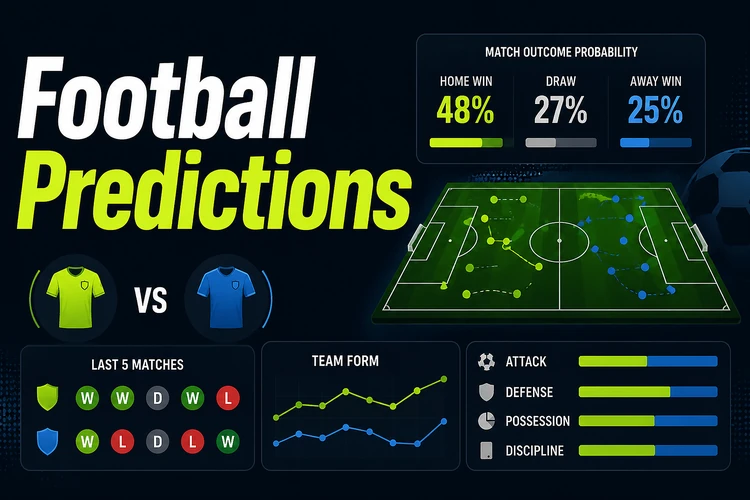
Expected goals can add context to scorelines by showing the quality of chances created and conceded. It is also useful to compare the underlying numbers with results: a winning run built on narrow margins may be less sustainable than a team consistently creating clear chances.
UEFA Competitions
The UEFA Champions League brings together elite clubs with deep squads and demanding domestic schedules. Rotation, injuries and the timing of knockout ties deserve attention, as teams may approach a league match differently before or after a major European fixture.
The UEFA Conference League features a broader range of clubs and competitive environments. Squad depth, travel distances and home performance can carry extra weight when opponents have limited experience of one another. League strength is relevant, but it should not replace evidence from current form and match statistics.
English Football
The English football pyramid offers extensive data, particularly in the Premier League. The Championship has a 46-match season, however, so workload and squad resilience can quickly change a side's level. Recent minutes played by key players are often as informative as the league table.
League One and League Two bring different conditions. Smaller squads make absences more disruptive, while direct play and set pieces can have a larger influence on results. Data is less granular than at the top level, so conclusions should be made with greater caution.
African Qualifiers and International Football
CAF World Cup qualifying requires a different lens from club football. Long journeys, changes in climate and familiar home conditions can strengthen home advantage. National teams also have less time to build tactical cohesion because players arrive from different clubs during international windows.
International sample sizes are smaller, and squad selection may change sharply from one window to the next. Recent club minutes, fitness and the availability of experienced players help explain why a team's previous international result may not fully describe its current level.
Youth and Friendly Matches
Youth competitions, including the UEFA Youth League, can be volatile because line-ups change frequently and development remains a priority. A strong academy record is useful, but the availability of players promoted to senior squads may have an immediate effect on a match.
Club friendlies need particular care. Managers commonly experiment with formations, distribute minutes across the squad and focus on fitness rather than the result. These matches offer limited evidence for later competitive fixtures.
Tennis Predictions
Tennis analysis centres on individual performance and surface conditions. Clay generally rewards patience and baseline consistency, grass places greater value on serving and short points, and hard courts sit between those extremes. Results should therefore be compared with opponents faced on the same surface.
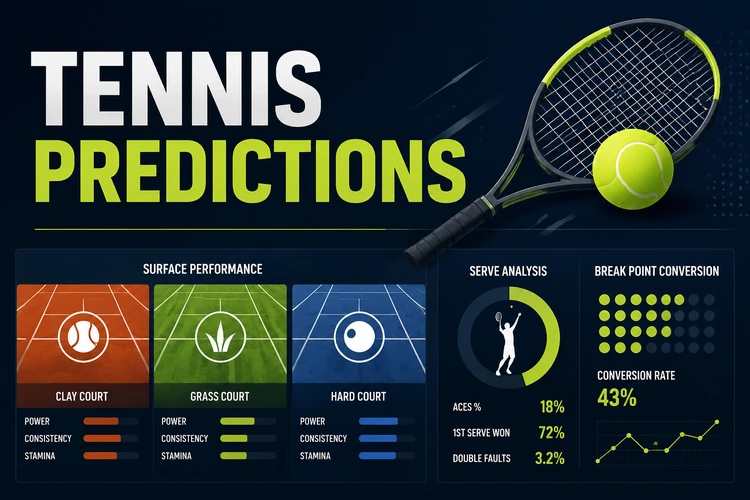
ATP and WTA data can highlight first-serve success, return performance, break-point conversion and recent workload. Matches played over the previous weeks matter, especially in long tournaments. In table tennis, fast momentum changes make recent results and head-to-head records especially useful reference points.
Basketball Predictions
Basketball models consider shooting efficiency, defensive rating, pace and turnover rates. In the NBA, travel and back-to-back games can affect energy levels, while a stylistic matchup may determine whether a team can play at its preferred tempo.
European competitions require separate calibration because schedules, rules and playing styles differ. Home-court advantage is relevant, but it should be weighed alongside rotations, injury news and the quality of recent opposition.
Darts and Other Sports
Darts analysis focuses on three-dart averages, checkout percentages and scoring consistency. High scoring alone is not enough if a player regularly misses doubles, so finishing statistics can be decisive. Other sports can be assessed with the same principle: use discipline-specific metrics rather than applying one model blindly.
Statistical Models and Methodology
Statistical models use historical results to identify relationships between measurable factors and match outcomes. New results update the data set, but a good forecast also needs context that raw numbers can miss, such as a late injury or an unusual schedule.

No model can guarantee a result. A deflection, refereeing decision or unexpected injury can change a match. A 60% win probability means that an outcome is favoured over many comparable cases; it does not make it certain in one game.
FAQ
Accuracy varies by league, data quality and match context. Top leagues usually provide richer data than lower divisions or friendlies. Forecasts are probability estimates, not guaranteed outcomes.
Elite clubs manage domestic and European commitments at the same time, making rotation, injuries and fixture congestion important. Knockout ties can also change tactical priorities and risk-taking.
League One and League Two squads are often smaller, so injuries and suspensions can have a larger effect. Data coverage is less detailed than in the Premier League, and direct play can increase match-to-match variation.
International teams meet less often and players travel from different clubs. Long journeys, climate, pitch conditions and home support can have a stronger effect than in many domestic competitions.
Surface, recent form on that surface, head-to-head history and physical condition are central. Serve and return figures, break-point performance and workload through a tournament provide useful context.
NBA analysis can use shooting efficiency, defensive rating, pace, turnovers and schedule factors. Back-to-back road games, player availability and contrasting styles are also relevant when comparing teams.